
Preparing a plenary lecture was actually a lot of work. I had never done such a thing in this scale, and probably will not in very near future. After more than half-a-year of article writing and lecture preparing, I must admit I felt exhausted. Of course, it was a huge honour to both me and our team to be invited to deliver this plenary in the 15th International symposium of the IAFSS in La Rochelle, France, this June. Big thanks to my co-author Soroush Rashidzadeh for your amazing contributions!
The title of the lecture was Thermal Radiation – From Science to Engineering. I started with an overview of methods in solving the radiation transport equation as well as radiative properties of gases. But the main focus was in the challenges arising from the use of grey assumption, and the operating principle of the modern non-gray models that tackle the non-greyness through spectral re-ordering.
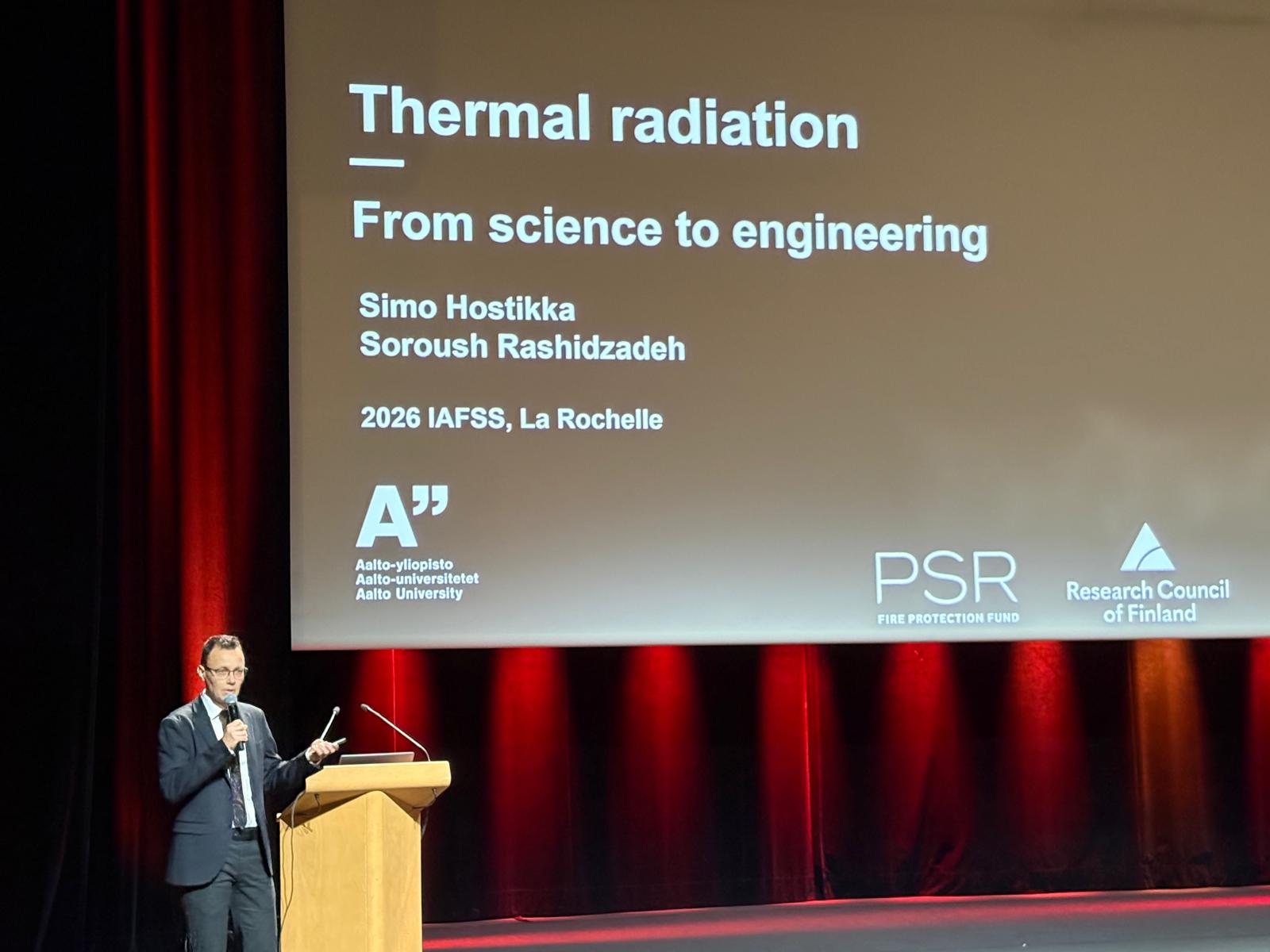
A recording of the lecture can be found from the IAFSS Youtube channel, and the full article from Fire Safety Journal.
Many colleagues have asked if they could use some of the presentation material. So I decided to share the PowerPoint file and the script for creating the Line-by-line (LBL) animation through GitHub. I used AI to generate the script, but was amazed how quickly I was able to perform real, physics based LBL using a true HITEMP API.
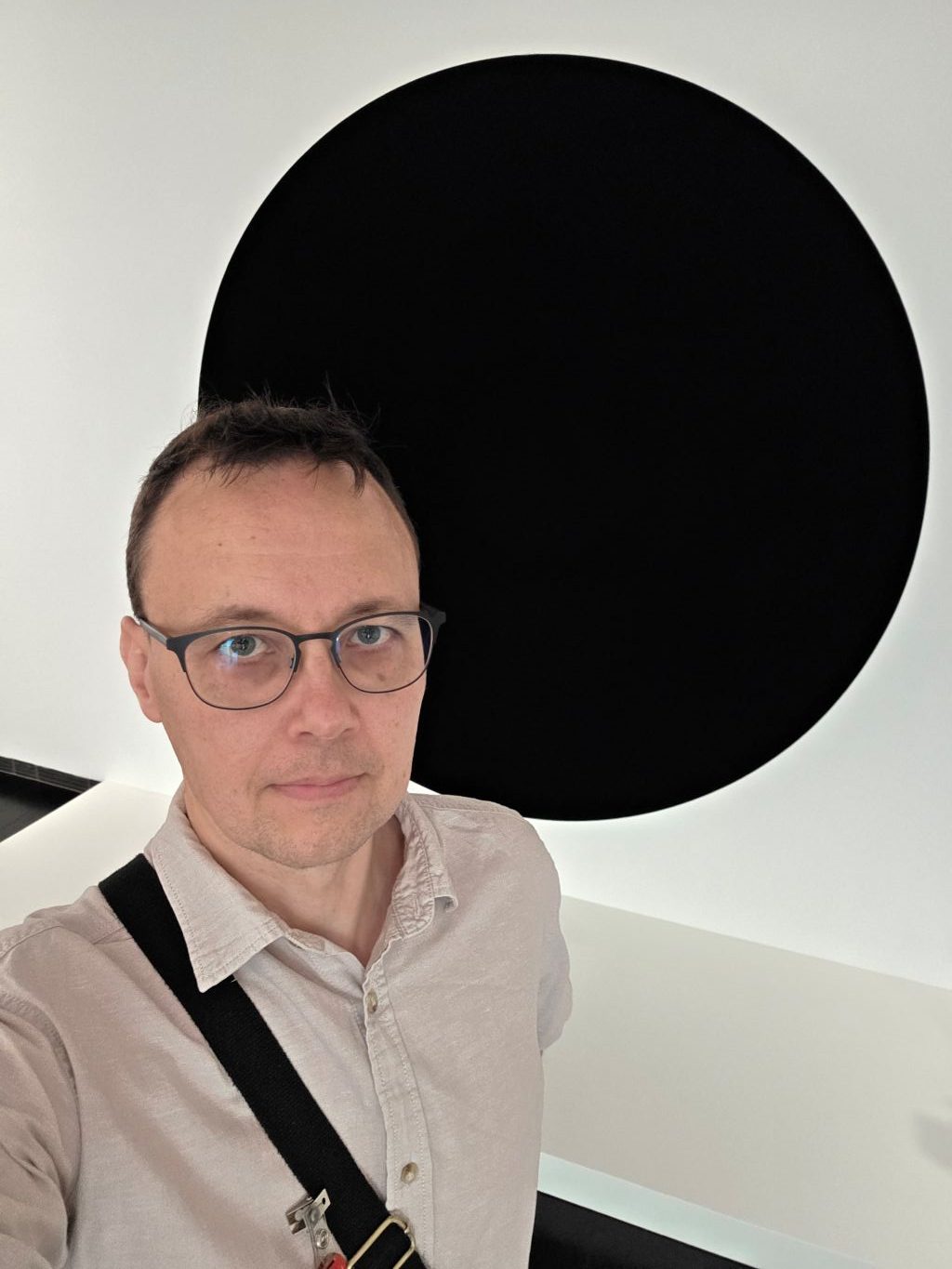
To celebrate the long process of writing the article and preparing the presentation, we visited Serlachius Art Museum in Mänttä, Finland with my wife. There we saw something very special: radiation -relevant contemporary art. Anish Kapoor’s Non-object black radiates but doesn’t reflect! In these sculptures, Kapoor has used Vantablack, a carbon nanotube -based commercial coating, which has super low reflectance at visible wavelenghts. (In their website, the manufacturing company claims absorption characteristics are similar all the way to far IR.) It was an amazing experience to watch something you don’t see! These objects have shapes, but you cannot see them until you watch from some particular direction, e.g. from the side.