Category Archives: Workshops

Making Knowledge: A map of threads, territories, and the MAST network cosmology

Second MAST Network Workshop. Aalto University, Finland, 2025

At the second MAST Network workshop, participants didn’t just discuss knowledge, they dyed it, stitched it, and pressed it into fabric. This is a report from two days of making, arguing, and building something together.

Building on Kautokeino: Map V1 as a living document

The second workshop built directly on outcomes from the first, held in Kautokeino, Norway earlier in 2025 (see Connecting with Lands, Terrain, and Materials – Supporting Localities). At that gathering, participants collectively drafted Map V1: a visual cosmology of the network’s shared concepts and values. Rather than treating this map as a finished product, the network understood it as an open substrate: something to be returned to, amended, and inhabited through practice.

For the second workshop, Map V1 was printed on fabric (figure 1). It would become both surface and prompt, a foundation onto which new knowledge could be stitched, literally and conceptually.
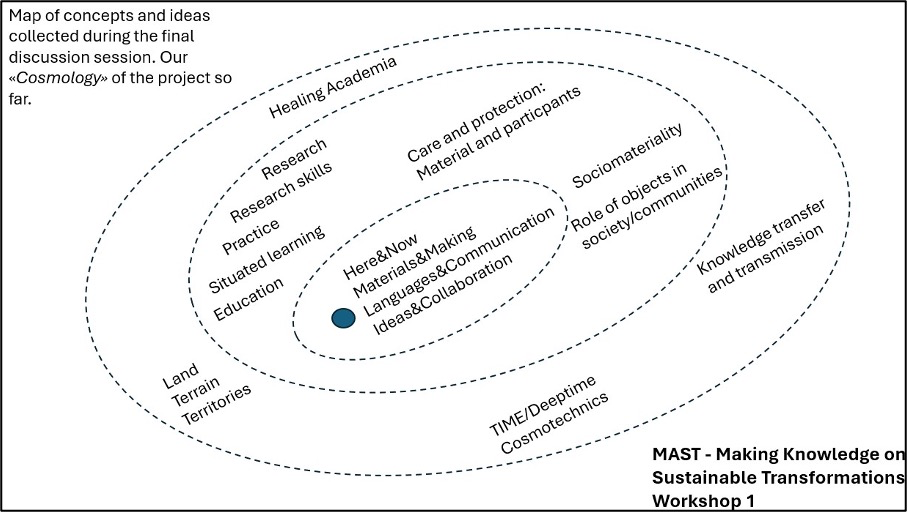
Figure 1. Map V1, drafted at the first MAST workshop in Kautokeino, Norway (2025). The map was printed on fabric and carried into the second workshop as a living document.

Indigenous Leadership and self-determination in research

Running through both days was a sustained reflection on three interlocking focuses for capacity building in research skills of this workshop: Indigenous leadership and self-determination in research projects; research infrastructures for arts, crafts, and knowledge-through-making; and the challenge of resisting cultural appropriation in cross-cultural collaborative settings.

Central to these discussions was a critical examination of how research institutions — universities in particular — relate to the communities whose knowledge they engage with. Who receives credit for knowledge production? Whose infrastructures are strengthened, and whose are bypassed? The network approached these not as abstract questions but as live problems shaping the conditions of the workshop and network.

From this reflection, participants identified three foundational and interlocking principles (figure 2) for ethical, self-determined knowledge production:

1) Knowledge acknowledgement. Recognising the specific origins and holders of knowledge systems brought into the collaborative space. 

  • Tension: who gets credited — universities or communities?

2) Capacity building in knowledge production. Strengthening the conditions under which communities can produce and circulate knowledge on their own terms. Focused on supporting independence and self-determination.

  • Aim: community-owned and/or managed research infrastructures

3) Avoiding intermediaries. Ensuring knowledge bearers maintain direct authorship and agency rather than being filtered through external actors. Inciting collaboration between indigenous communities, focusing on their strengths and struggles, and problematizing collaboration in the network.

  • Open question: how to support direct collaboration between indigenous actors?
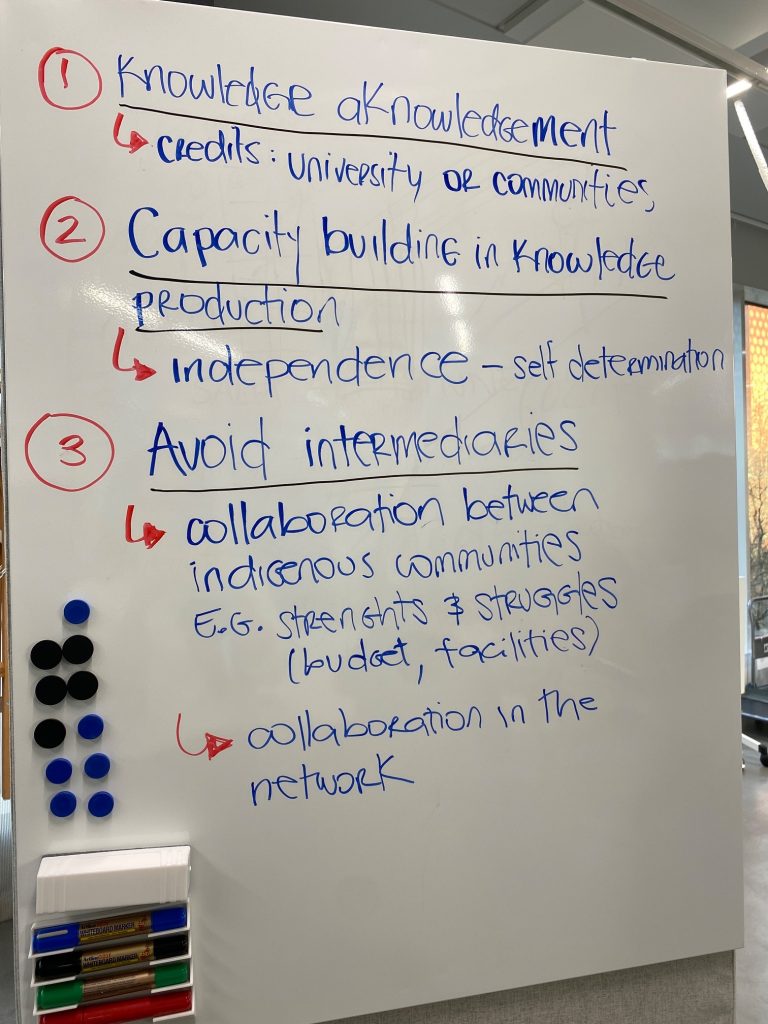
Figure 2. Three foundational and interlocking principles, drafted at the second MAST workshop in Espoo, Finland (2025). 

These principles were then used to problematize and extend the concepts and ideas already present in Map V1, giving the making activities that followed a critical and reflective foundation.

Knowing through making: practice of dyeing with plants from different territories

Both workshop days opened with presentations by network participants and invited guest speakers from Peru and Colombia. These presentations grounded the subsequent making activities in the specific knowledge traditions they drew upon establishing context before the hands began their work.

The core making practice of the workshop was the dyeing of yarn using pigment derived from Bixa orellana seeds, known in Brazil and Ecuador Amazonian contexts as achiote, annatto or urucum, and Viburnum known as Pelotillo in Sibudoy, Colombian Amazon (figure 3)and blueberries from Finland. This choice was not incidental. The use of territory-based dyes and colours served as an entry point into exploring how visual systems embedded in textiles can carry, remember, and transmit knowledge within and across communities. Global South–North dialogue and knowing-through-making, facilitated by Amazonian and Sami knowledge bearers and local designers, was incited to support what Hagelin (Colonial Continuity in Finland: Cultural Appropriation of Sámi Design) notes as knowledge-through-making and resisting cultural appropriation . 
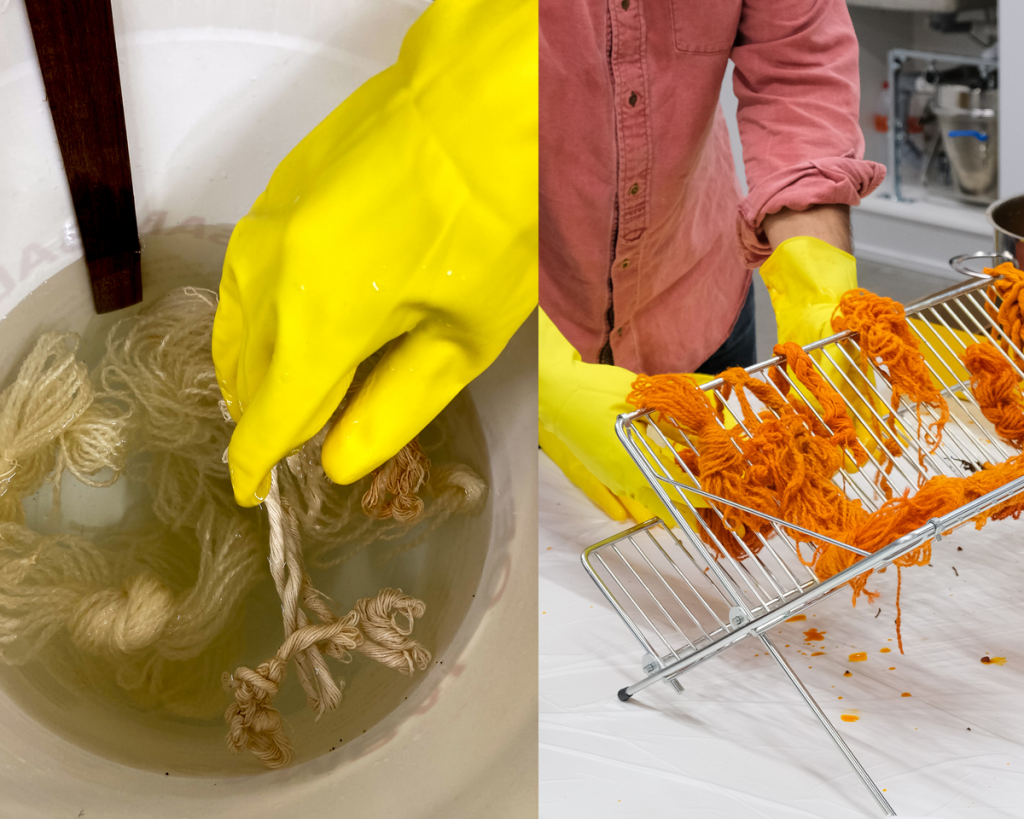
Figure 3. Right: dying threads with Viburnum. Right, died threads with bixa orellana at the second MAST workshop in Espoo, Finland (2025). 

The dyed threads were then used to embroider the fabric map, with participants adding stitched text and imagery derived from the dye itself (figure 4). This created a layered, multisensory artifact: a map of ideas that was simultaneously a record of embodied process, a bearer of territorial knowledge, and a collective act of meaning-making.
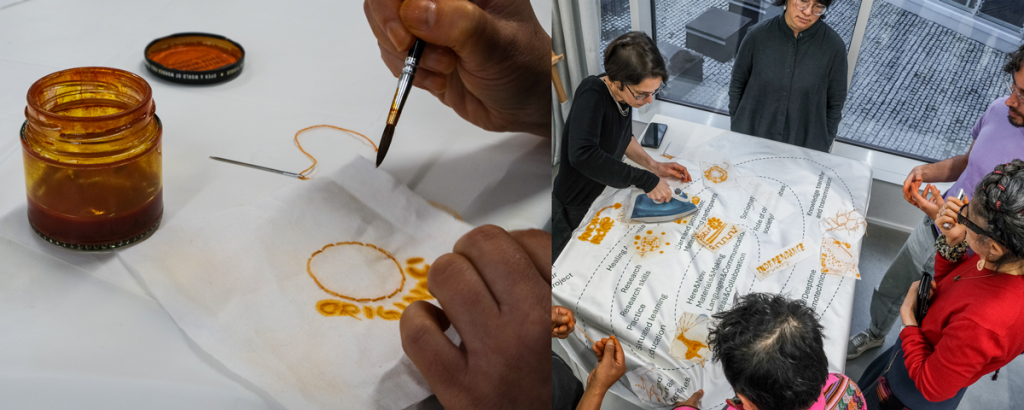
Figure 4. Working with materials and map at the second MAST workshop in Espoo, Finland (2025). 

Map V2: A Cosmology in thread

During the workshop and map making, participants reflected on the unexpected ways connection and meaning-making can happen across language barriers — through images, artefacts, and shared presence. One of our network members, Hanna Máret Outakoski, noted that even without a common language, conversations revealed deep commonalities between Sami and Amazonian knowledge traditions, including shared questions about how symbols from sacred or ancestral contexts should (and should not) travel. The importance of Indigenous voices remaining present to guide those decisions was underscored as central to developing respectful academic exchanges.

By the close of the second day, the network had produced Map V2: an embroidered, and stitched elaboration of the original fabric map (figure 5) using dyed threads. In it, the concepts and values collectively agreed upon in Kautokeino have been given material form: rendered in the ochres and rusts of achiote, held in the weave of yarn, made tangible through accumulated hours of collaborative labour. After the workshop, the map was shown on an open exhibition at Aalto University showcasing the final product (more on this here NordForsk note on MAST network work)
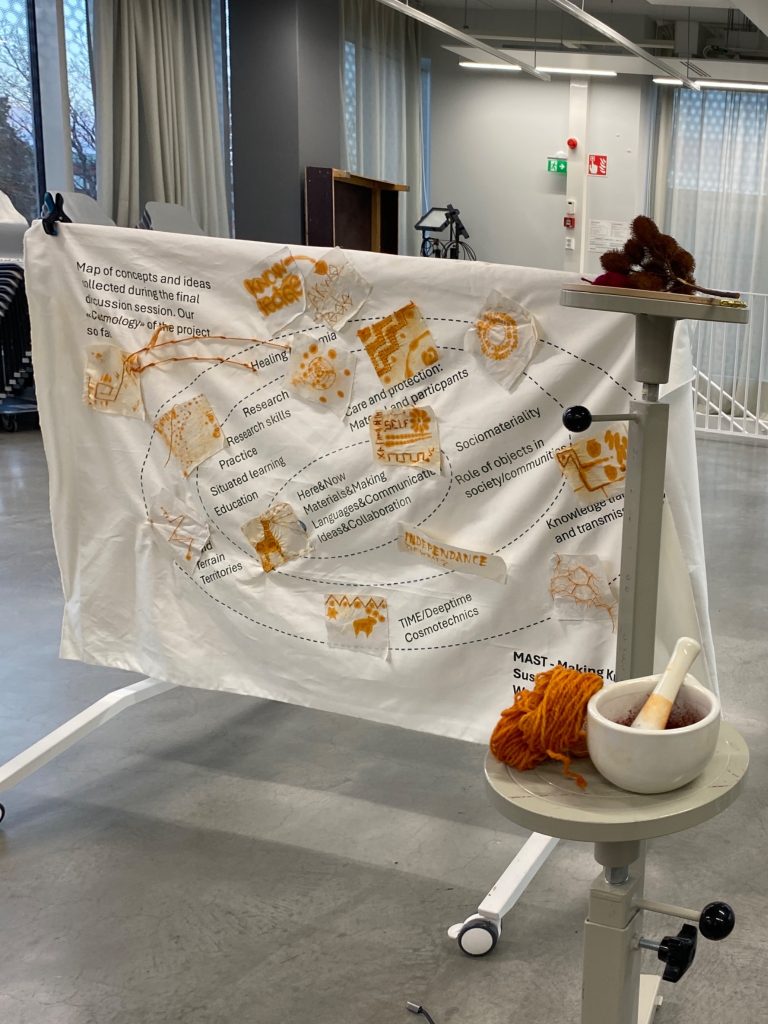
Figure 5. Workshop 2 outcome: Map V2: a threaded cosmology. 

The map is not a summary. It is an argument: that knowledge is made as much as it is spoken, and that the conditions of its making matter as deeply as its content.  It will continue to travel with the MAST Network as both documentation and provocation, gathering new stitches as the network’s inquiry deepens.
Connecting with lands, terrain, and materials – Supporting Localities

By Hanna-Máret Outakoski, Sámi allaskuvla/Sámi University of Applied Sciences, Oahpaheaddjeoahpuid goahti/Department of Sámi teacher education, Norga/Norway.

Cindy Kohtala, Umeå University, Umeå Institute of Design, Sweden 

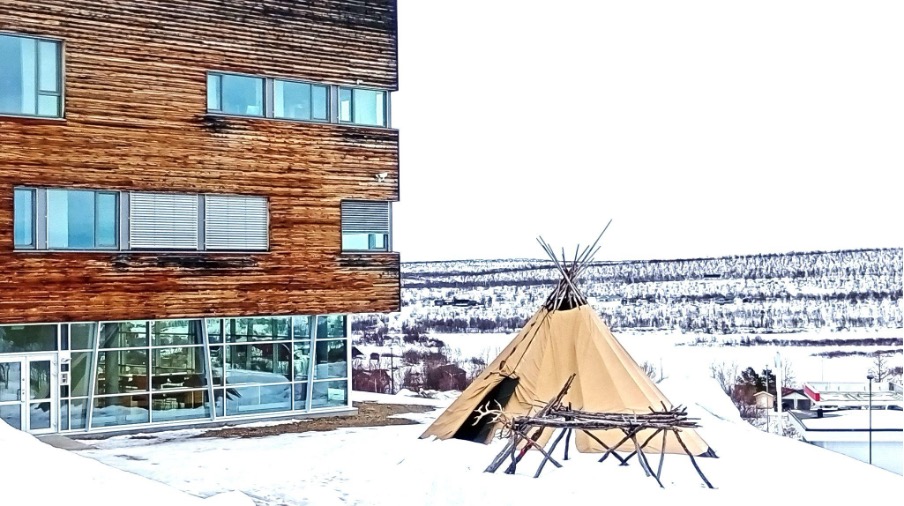
In our first workshop, called Making Territories, we were hosted by Sámi allaskuvla, Sámi University of Applied Science in Kautokeino, Norway, see Photo 1. Sámi allaskuvla is located at the heart of Guovdageaidnu/Kautokeino municipality in Finnmark, Norway. This is a territory of reindeer herding tradition that is still following the seasonal movements of the reindeer herd. This is also where the Sámi language is the main medium of communication in the worklife as well as in the private life of the people. Traditional knowledge is still a part of the everyday life of people, as is making and crafting. 

Photo 1: Sámi Allaskuvla/University of Applied Sciences in April 2025, by H.-M. Outakoski.

As our meeting took place in April 2025, the reindeer herders of the area were moving their reindeer to summer grazing lands. The spring move was accompanied by strange weather that had continued from the autumn, keeping the hard crusted snow on the ground also up on the mountaintops. The unpredictability of weather and snow conditions, and threats to the sustainable future of the core Sámi livelihoods, were trending as a subject in many academic talks and as a main topic of the coffee break discussions during that spring at Sámi allaskuvla. In many ways our first network meeting on making knowledge on sustainable transformations (MAST) seemed to be at the right place at the right time. 

The workshop

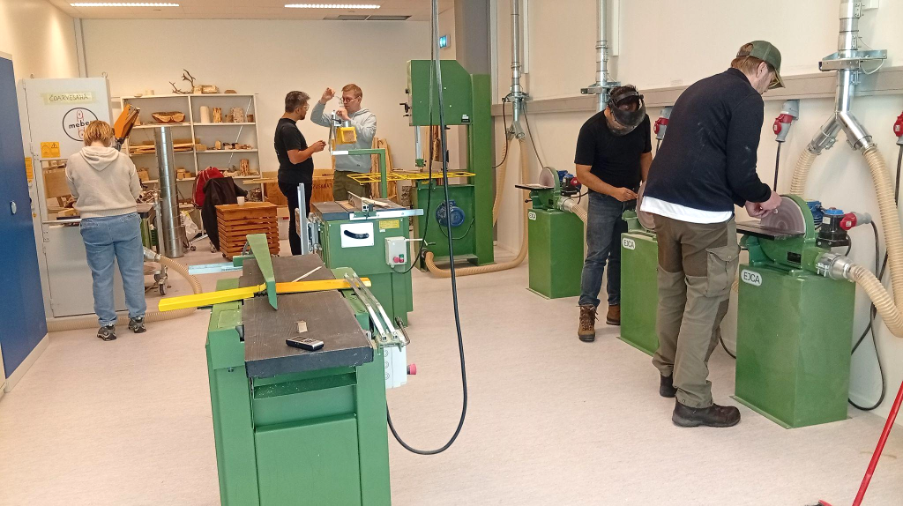
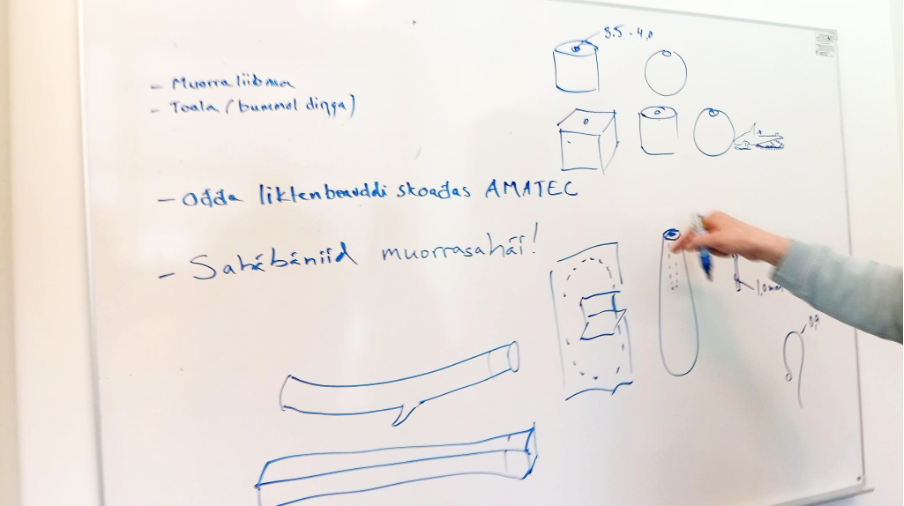
The three day workshop was structured to encompass short introductory and informative lectures; working hands-on with reindeer-bone porcelain, reindeer antler, and wood, under the guidance of experts; and ongoing discussions while making and presenting, see Photos 2 and 3. We were fully focused on learning about – through talking and doing – duodji and the knowledge and experience that duodji embeds and embodies. (Further reading: Duodji as a Starting Point for Artistic Practice

We then drew together our learnings and experiences by putting forward first reflections in one round and then deepening the insights and commenting on others’ in a second round. The discussion wove together the interface of language, embodied experiences of making, and knowledges of landscapes, conditions, soil, environments, histories and materials. We led ourselves through a rich story of the future of things, the role of objects in society, and a more profound understanding of “socio-materiality”.

Photo 2: Researcher Samuel Valkeapää drawing and explaining the steps of the making process that support localities. 
Photo 3: Researcher Samuel Valkeapää guiding workshop participants during the reindeer antler and wood crafting session. 

Sites and materials

While the term ‘care’ is vulnerable to overuse and superficial understanding in today’s academic environments, we came to know and feel how care for sites, soil, land and localities manifests in care for materials and things. In highly urban and hypercapitalist, consumerist contexts, such ways to care have been forgotten or have been made invisible and undervalued. In many cultures there may even no longer be words that carry such practices in language as a technology.  

Let’s consider the example of luonddu oassi: Professor Gunvor Guttorn explained this concept by telling us a story of her father, who had taught her about antlers. It was important to leave antlers that had already fallen on the ground to stay on the ground if they had been there for some time. “Nature’s share” means that one should give back to nature what is meant to be given back. It is then up to the person to decide and when this is appropriate and when it is not needed. 

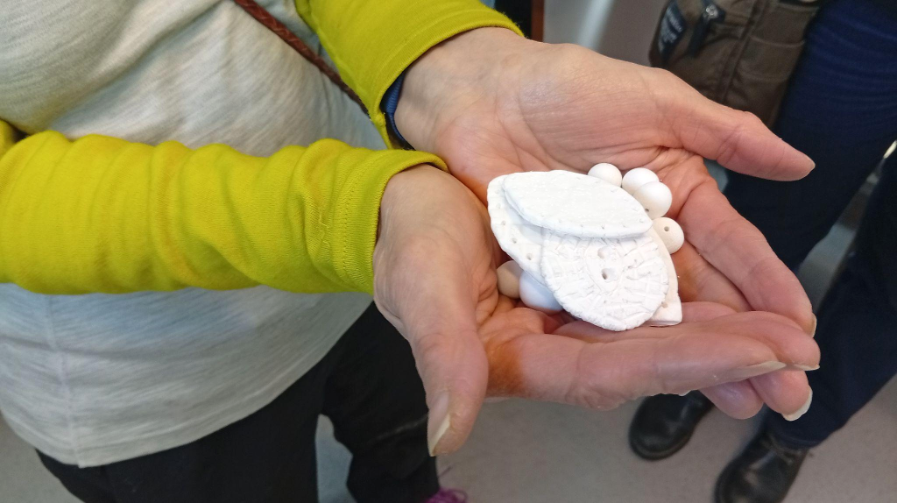
We also worked with reindeer bone porcelain, and ceramist researcher Mirva Kosonen, a master’s student at Aalto University, coached us on how to care for the material and how to make forms with it that respects its nature, see Photo 4. Through her lecture, watching her work and having her guide us in understanding the material, we had flickers of memory from our ancestors having lived with mountains and stone turned to dust and soil and clay, over thousands of years. In a way, some of us felt that working with this novel material (china of reindeer bone rather than cow bone) connected us more deeply with the profundity of nature and the earth, human endeavour, and even further back to the creation of the continents. Deep Time. 

Photo 4: Caring and working on the reindeer bone china. 

Language as an interface 

Language and terminology were very much at the centre of our meeting that brought together researchers and artists from four Nordic countries. Many of us had roots in cultures and places outside the Nordics. The common language for communication during the network meeting was English. However, the conversations between individuals showed a much more versatile take on communication as different languages were accompanied by embodied non-verbal communication, pictures and drawn examples, non-verbal hands-on instructions on how to work on certain materials, emotional signals, and much more. 

During our workshop, 16 central Northern Sámi terms or concepts were mentioned (some of which are mentioned also in this text). Most of the time, the Sámi concepts were not accompanied by a translation or explanation, but the Sámi participants used them naturally as parts of speech when speaking about the Sámi worldviews, materials, values, nature, arts and crafts. Presentations and talks given by the Sámi representatives and leaders of the Sámi crafting sessions also emphasized that relations and relationality are at the centre of Sámi ontologies and epistemologies. This view obliges the researcher, or the artist, to consider responsibilities toward the lands, the materials, and the powers in nature, and to respect the ways procedural and process-oriented knowledge is generated, stored, and mediated. During our final sharing session, one of the participants’ wishes was to get a deeper understanding of the central Sámi concepts to be better prepared to meet the expectations and needs of the future research collaborations with the Sámi academic and non-academic communities. 

A Safe Space for discussions 

As such space was created, we were able to understand certain Sámi terms as concepts without verbal definitions. We were able to come to this understanding through the discussions and making/creating together. In the meetings, we were open to sensitive questions at the same time as we were committed to caring for each other as researchers, practitioners, craft-makers (duojár), academics, and teachers. In many of the conversations, this kind of opportunity to meet and discuss matters from different perspectives was seen as an example of methods that can be used for healing academia. We also agreed on having several views on what the need for healing was, depending on the disciplines and the many research perspectives that the group members represented, as we come from different research contexts. 

During our first network meeting, the goal for the meeting was to reach a state of successful exchange of ideas. A Sámi term, that was introduced early on during the network meeting, was “gulahallan”. This word has morphological parts that refer to hearing and making someone hear, a kind of reciprocal relationship and a complexity that tells us that the meaning of the word cannot be so simple. Gulahallan is also mentioned as the first Code of Ethical Conduct in the freshly published Ethical Guidelines for Research Involving the Sámi People in Finland (nbnfioulu-202405294076.pdf). In that publication gulahallan is explained as reciprocal communication and engagement. Here, we could describe gulahallan as being about having conversations and discussions, keeping in touch, with the goal of sharing insights as well as being open to other people’s understandings and views. This kind of meaning making process can also be extended beyond human-to-human conversations including, for example, the processes of reading and understanding one’s environment. English words such as communication, dialogue, mutual comprehension, and negotiation of meaning indicate some of the joined meanings of gulahallan, although they seldom extend to situations beyond human-to-human interactions. Successful gulahallan means that there has been a state or process of coming into a mutual understanding of things, even if it entails that some views are recognized and accepted as being opposite to each other. A non-successful gulahallan can be any kind of communication where, for example, the conversation partners either do not manage or want to create a mutual understanding of things, or they are not in tune with the goal of gulahallan in the first place, the direction of the communication is a one-way route, or there are other, perhaps external, reasons why the gulahallan does not succeed.  

Time and temporality

This was another central theme that became evident, as our discussions led us to a further illustration of what we saw as the ‘cosmology’ of our overall project. We saw ourselves in a timespace where we are “here and now”, yet connected through hundreds, even thousands of years in the past, through practices and materials, to visions of the futures we wish to see. This was possible especially through working with reindeer bone porcelain and antlers and the connection of the human, community, livelihood, animal and soil, as we indicated earlier. Gunvor in turn guided us into another time dimension where materials are collected and their interrelations cared for, over long periods of time. (Want to read more about Deep Time and temporality? See e.g. The Deep Time Walk – How Effective Is It? and Deep history and deep listening: Indigenous knowledges and the narration of deep pasts.) 

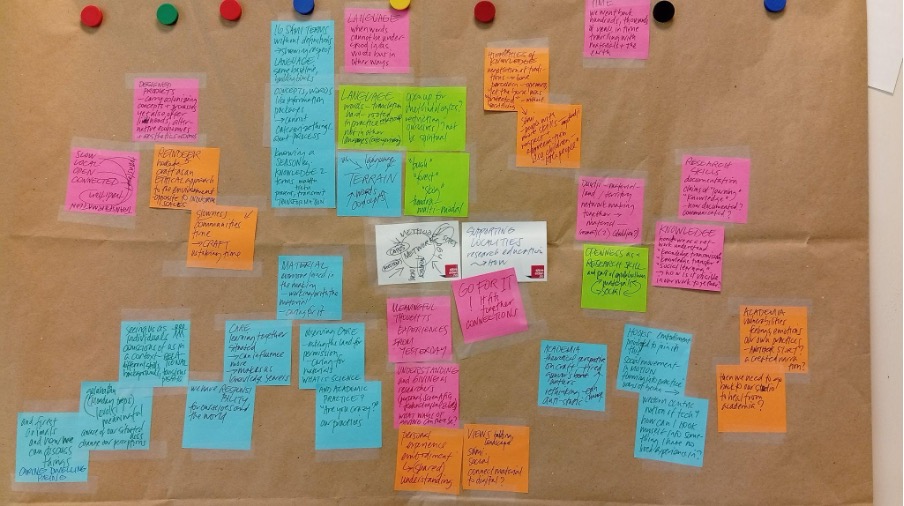
Photo 5: Idea map resulting from the final group discussion of the network meeting. 
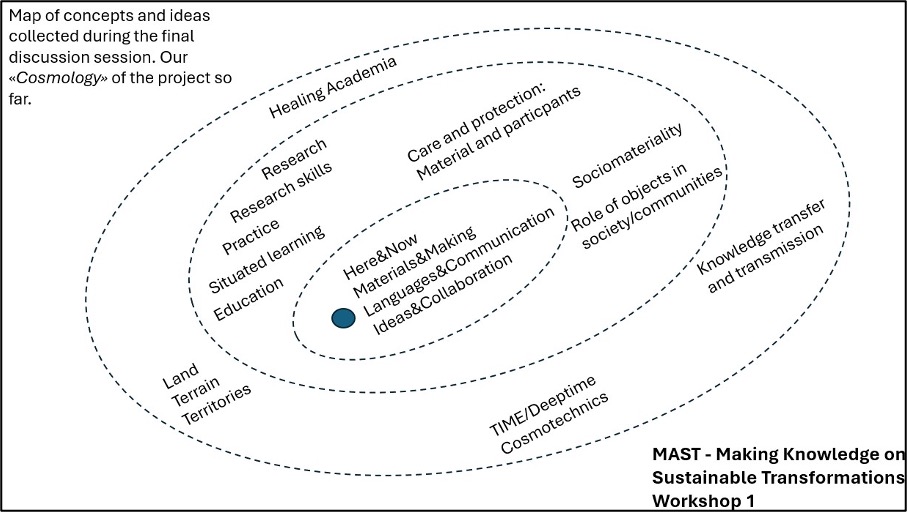
Figure 1: The results of the final discussion session presented as a “Cosmology” of the first network meeting. 


At the end of the workshop we collected and synthesized our ideas and insights into a “research map”, see Photo 5, which became something of a “Cosmology” of the first meeting, see Figure 1.    

Final thoughts

Through our work, we address research, education and practice and the importance of care ethics, which informs the research skills we wish to foster throughout the project. Through this we see making practices as part of a healing academia by which we know better how to care for land, materials and other relations. 

Interestingly, given our attention to language, we did not use the word “territory” very often, even if the title of the workshop was “Making Territories”. Instead we referred to terrain, land, landscape and other relational terms that do not carry the baggage of a damaging colonial history wrought by the global North. In fact, this is a compelling point to address in future in our network, in North-South dialogue. In Latin America, territorio has been a term connected to resistance and protecting land and community from oppression (Further reading: Space, Power, and Locality: the Contemporary Use of Territorio in Latin American Geography). 

If we are losing language, if words lose their meaning and techniques become tools of extraction rather than enrichment for localities, how can we regain what we need to survive and thrive in sustainability transformations? Perhaps we can make small steps together and learn in knowing-through-making.